
#ShababNow #StrongWomen
Legislation as as Tool for Inclusive & Participatory Democracy
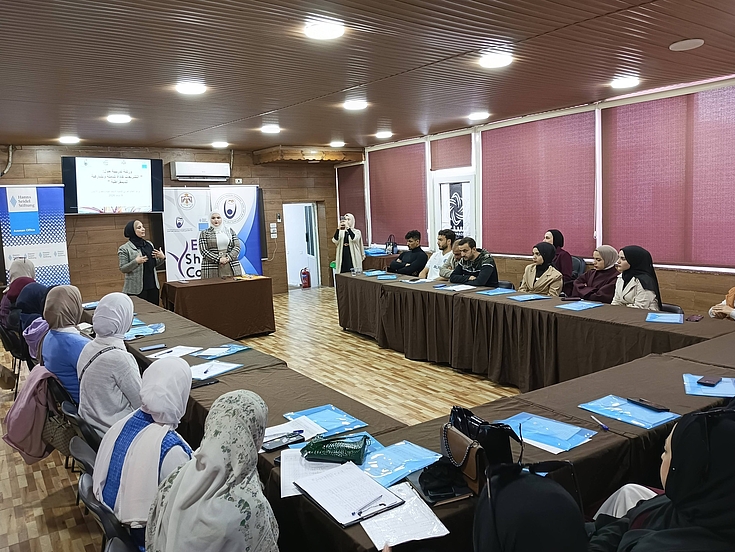
The workshop focused on strengthening participants’ understanding of democracy and the role of legislation within democratic systems. Through interactive discussions and group work, participants examined how legislation translates democratic values into binding legal frameworks that regulate the relationship between the state and society. Emphasis was placed on the idea that democracy is not limited to periodic elections, but is closely linked to the quality, inclusiveness, and accountability of legislative processes.
Participants explored the stages of the legislative process in Jordan, including the preparation, discussion, approval, and enforcement of laws, as well as entry points for citizen and civil society participation. The workshop highlighted the importance of meaningful public engagement in lawmaking, moving beyond symbolic participation toward effective and inclusive involvement that enhances trust in public institutions and improves the quality of legislation.
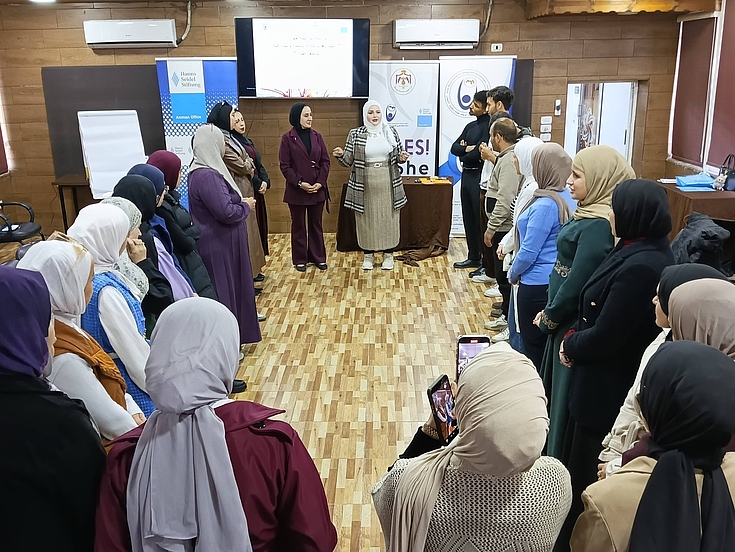
Working group sessions allowed participants to analyze the constitutional timeline for issuing laws and identify opportunities for community input, consultation, and advocacy. Discussions also addressed the respective roles of political parties and civil society organizations in representing youth interests within the legislative and political landscape.
The workshop contributed to enhancing participants’ knowledge of democratic principles, legislative processes, and civic engagement. It also strengthened skills related to dialogue, critical thinking, teamwork, and public participation. Participants emphasized the value of such activities in expanding youth networking, transferring knowledge to the wider community, and encouraging active citizenship.
At the conclusion of the workshop, participants presented a set of recommendations, including extending the duration of similar trainings, expanding outreach to remote areas, strengthening civic and political education, improving the implementation and enforcement of laws, promoting transparency and accountability, and continuing to organize regular capacity-building activities in Ajloun Governorate, with dedicated sessions on political parties and youth engagement.